
 Svenska
 Deutsch
Cart
Your cart is empty, but doesn't have to be.
Your cart is empty, but doesn't have to be.
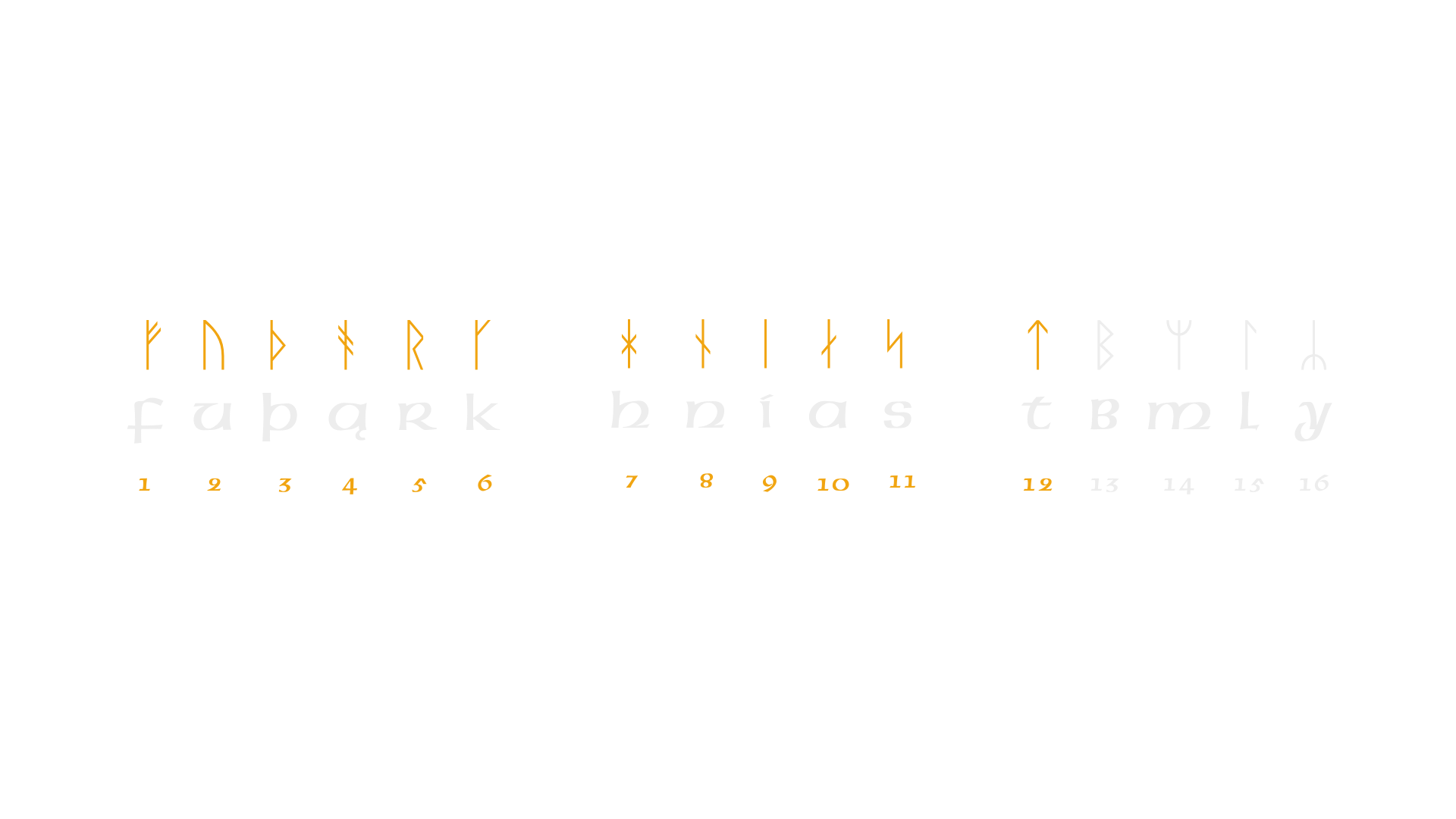
Runes are among the most powerful symbols of the Viking Age. With these symbols, memories, laws, and stories were carved—many of which can still be read today on runestones scattered across Scandinavia.
The Younger Futhark emerged in the Nordic region in the 8th century as a development of the Elder Futhark, which was used further south in Europe. The Younger Futhark was better suited to the Nordic languages and consisted of 16 runes—fewer than the Elder Futhark’s 24 characters.
A script of the gods
According to mythology, it was Odin who uncovered the secrets of the runes by sacrificing himself on the world tree, Yggdrasil. As a result, each rune carried a divine aura and was used with both reverence and care. Runes were carved into grave monuments, weapons, jewelry, and everyday objects, serving as messages, memorials, and incantations.
As Christianity spread across the Nordic lands from the 11th century onward, runes were gradually pushed aside. The Latin alphabet, which arrived with the Church and its scriptures, took over as the dominant written language. Over time, runes nearly vanished from everyday use—but their traces remain in runestones, in folk tradition, and in the symbolic language of the Nordic soul.
Below are the 16 runes of the Younger Futhark, with traditional names and their approximate meanings:
1. ᚠ – Fairy
Meaning: Livestock, wealth, material wealth. Symbol of material prosperity but also of that which must be nurtured to last.
2. ᚢ – From
Meaning: Slag, strength, power, raw or uncontrolled energy. Represents the raw power of nature and man's ability to endure.
3. ᚦ – Þurs
Meaning: Giant, the power of chaos, something dangerous or powerful. A force that can be both destructive and creative depending on how it is mastered.
4. ᚬ / ᚭ – Óss / Áss
Meaning: Gods, especially Odin. Connected to speech and words, wisdom, spiritual power, inspiration and insight.
5. ᚱ – Ride
Meaning: Ride, journey, movement, journey, change. A rune for both physical and inner journeys.
6. ᚴ – Kaun
Meaning: Wound, illness, fire that purifies or torments, heat, transformation. Associated with fire that purifies through trial.
7. ᚼ / ᚽ – Hagal
Meaning: Hail, upheaval, forces of nature, the strength of nature, abrupt changes. A reminder that life can turn around quickly.
8. ᚾ – Nauðr
Meaning: Need, demand, trial that leads to strength, resistance, discipline. A rune for finding strength when it is darkest.
9. ᛁ – Ice
Meaning: Ice, stillness, obstacle, cold, control. Represents both clarity and risk of stagnation.
10. ᛅ – Year
Meaning: Year, good harvest, prosperity, success, good times. One of the most positive runes, connected to balance and abundance.
11. ᛋ – Sun
Meaning: Sun, victory, life force, vitality. A force that dispels darkness and leads the way forward.
12. ᛏ – Tyr
Meaning: The god Tyr, courage, honor, justice and sacrifice. A warrior's rune that is about doing the right thing.
13. ᛒ – Bjarkan
Meaning: Birch, fertility, protection, growth and healing. Connected to the rebirth of nature.
14. ᛘ – Mother
Meaning: Human, human nature and relationships, humanity, cooperation. A reminder of relationships and social bonds.
15. ᛚ – Lie
Meaning: Water, flow, legal matters. Symbolizes both movement and structure, like the path of water through the landscape.
16. ᛦ – Year
Meaning: Yew, bow, precision, focus. Connected to focus, purposefulness and long-term plans.