
 Svenska
 Deutsch
Cart
Your cart is empty, but doesn't have to be.
Your cart is empty, but doesn't have to be.
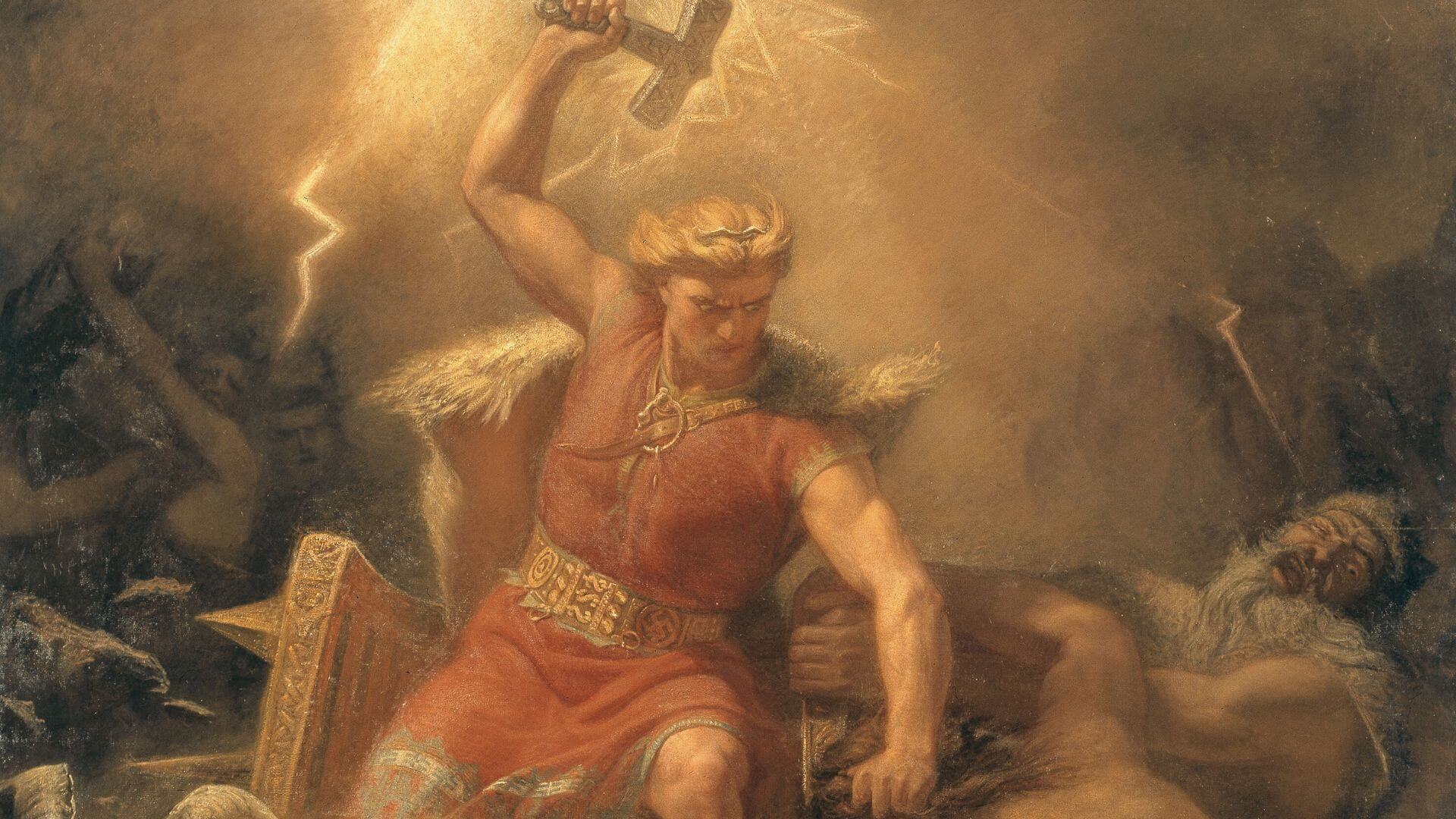
Norse mythology is one of the most magnificent and enigmatic story worlds ever created by humanity. It permeated every aspect of Viking society—how people viewed nature, how they understood fate, and how they interpreted the passage of time. For the Vikings, mythology was not a collection of children’s tales; it was a living part of everyday life, a map of how the world worked and why everything was the way it was.
At the center of this worldview stood Yggdrasil, the mighty world tree whose roots and branches stretched throughout the entire universe. Around the tree lay the nine worlds, each inhabited by different beings and governed by its own laws.
There was Asgard, the stronghold of the gods; Midgard, the world of humankind; Jotunheim, the raw realm of the giants; Alfheim, the radiant domain of the light elves; Svartalfheim, the deep forges of the dwarves; Hel, the silent world of the dead; Muspelheim, the fiery realm of flames; and Niflheim, the ancient cold of mist and frost. The world was not static—it was in constant motion, shaped as much by unseen forces as by the cycles of the seasons and the movement of the heavens.
The gods themselves were divided into two families—the Aesir and the Vanir. The Aesir were the gods of order and war, those who maintained the balance of the cosmos through strength and wisdom. The Vanir were the guardians of nature, fertility, and magic. Once, these two families had been at war, but when peace was made, they were united to rule the world together. This union of strength and nature magic reflected the Vikings’ own view of life: both discipline and harmony were needed for the world to endure.
Odin, the one-eyed ruler, was both warrior and poet, both king and mystic. He sought knowledge more than power, sacrificed his eye for wisdom, and hung for nine nights on the world tree to gain insight into the secrets of the runes. The runes were not seen merely as symbols; they were keys to deeper truths, tools capable of influencing both fate and the forces of nature.
Thor, Odin’s son, represented another side of life. He was strength, security, and protection. When storms roared across the seas, people believed it was Thor’s hammer, Mjölnir, striking the giants and keeping chaos at bay. Many Vikings wore his symbol for protection on their journeys—whether sailing toward unknown shores or opening new trade routes across Europe and Asia.
Freyja, the most powerful goddess of the Vanir, embodied love, beauty, and magic. She mastered seiðr, a form of magic that could influence both fate and the mind. Her brother Freyr was associated with fertility, prosperity, and peace, and his cult was especially important in agricultural societies.
Moving among them all was Loki, the unpredictable trickster. He was neither good nor evil, driven instead by a restless energy that sometimes led to brilliance and sometimes to catastrophe. It was often Loki’s schemes that set the greatest adventures of the myths in motion—and it is his betrayal that ultimately helps unleash Ragnarök, the great final battle that marks the world’s destruction and rebirth.