
 Svenska
 Deutsch
Cart
Your cart is empty, but doesn't have to be.
Your cart is empty, but doesn't have to be.
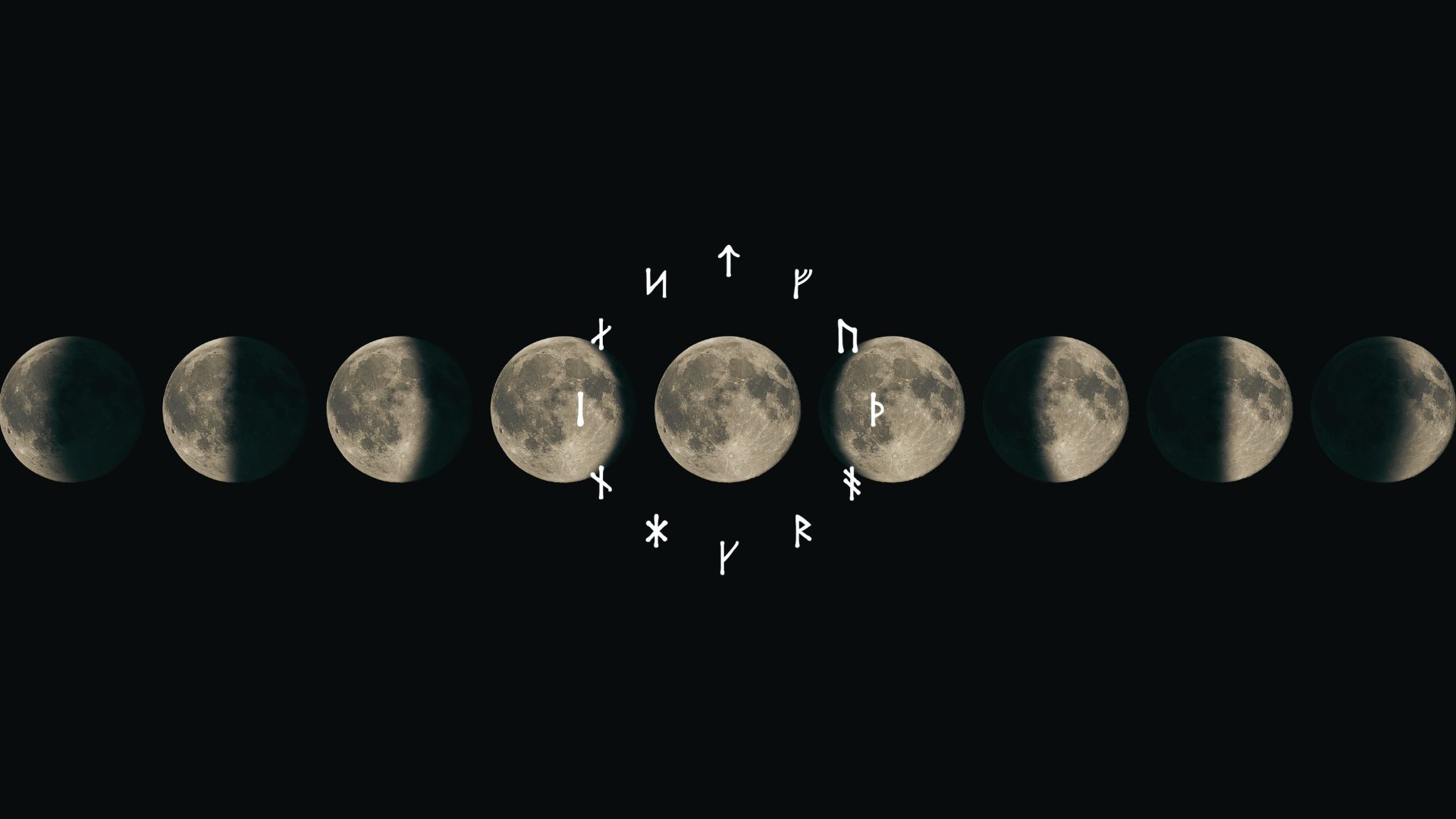
The Metonic cycle, or lunar cycle, is one of the oldest known systems for understanding how the solar year and the phases of the moon relate to one another. Discovered in antiquity by the Greek astronomer Meton, the cycle describes how the moon returns to nearly the same phase on almost the same calendar day every nineteen years.
To keep track of these nineteen years, the Golden Numbers were used—nineteen symbols that assigned each year in the cycle a specific position. With their help, people could predict the phases of the moon, determine the timing of festivals, and understand the recurring rhythm of the seasons.
The Golden Numbers were an early form of year numbering, but unlike modern calendars, they constantly reset. This way of viewing time aligned well with the Vikings’ cyclical perception of time as something that continually returns, much like the seasons themselves.
In the Nordic regions, this system took on a unique and symbolic form. Instead of numerals—which the Vikings did not use—runes were employed. These were carved into rune staffs (or primstaves), wooden staffs that functioned as perpetual calendars. Each rune represented one of the Golden Numbers and thus its place within the Metonic cycle.
In this way, runes became more than a written language; they became symbols for measuring and understanding time. The runes connected humanity to the cycles of nature—the path of the sun, the changing phases of the moon, and the eternal circular movement of time.