
 Svenska
 Deutsch
Cart
Your cart is empty, but doesn't have to be.
Your cart is empty, but doesn't have to be.
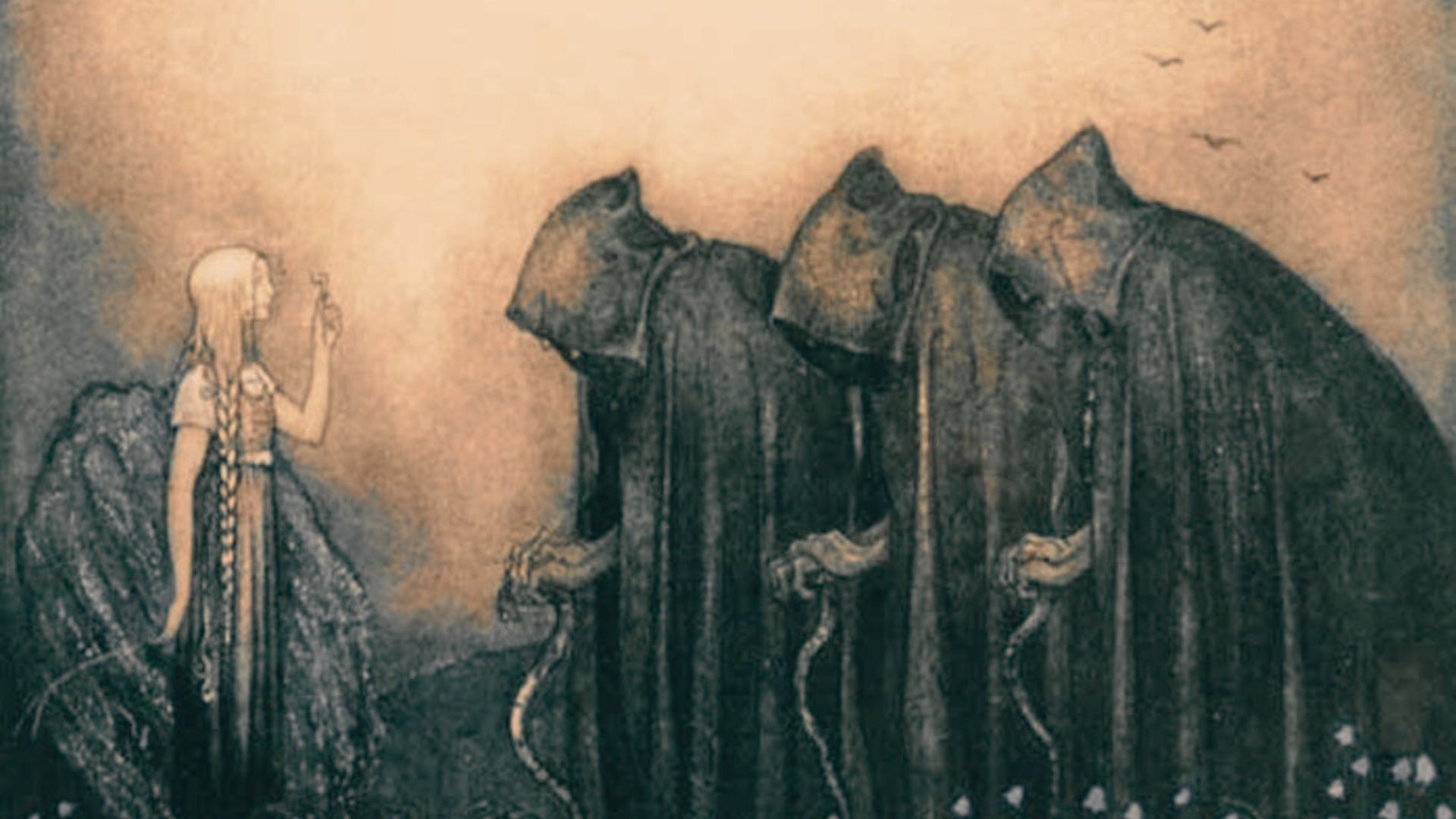
Norse mythology was not merely a collection of stories about gods and heroes. For the Vikings, it was a way of understanding the world—a framework that gave meaning to both everyday events and cosmic forces. It expressed the interplay between light and darkness, order and chaos, life and death.
Unlike many civilizations that viewed time as a straight line, the Vikings perceived it as cyclical. The seasons, the phases of the moon, and the rhythms of nature constantly returned—and so did the great events of the world. Life moved in cycles of creation, destruction, and rebirth.
The ultimate expression of this was Ragnarök, the great final battle in which gods and giants meet, the world falls—and a new world rises from the sea, green and full of life. Nothing was eternal, yet nothing vanished completely. This gave the Viking worldview both humility and strength—everything changes, but everything returns.
Runes were more than an alphabet. They were seen as sacred signs, ancient symbols that carried the hidden forces of the world. Odin himself had sacrificed himself to gain their knowledge, and for that reason the runes were believed to hold power over fate, nature, and the spirit realm.
Magic—especially seiðr—was a deeply integrated part of the culture. It was used to glimpse the future, influence events, or seek protection. Gods such as Freyja and Odin mastered the mysteries of seiðr, and many Vikings regarded magic as just as real as wind and water.
The myths lived on in the sagas told by the hearth, in skaldic poetry, in the symbols carved into jewelry and weapons, and in the rituals performed during festivals. They gave people an understanding of courage, honor, loyalty, and the forces that govern the world.
Even today, Norse mythology continues to fascinate. It speaks of humanity’s greatness and vulnerability, of the struggle between order and chaos, and of the hope that survives even the darkest night. Through these stories, we gain a unique insight into the Viking mindset—and into the culture that shaped the Nordic world.
Read more about Norse mythology on the Rúna blog.